


TPO vs PVC vs EPDM: Which Flat Roof Is Right for Your Building?

Updated: 21 hours ago
If your building has a flat roof, there's a good chance it's one of three materials: TPO, PVC or EPDM. They all keep water out. But they aren't the same, and the right one depends on your building.
Here's the simple version.
TPO: the most common choice
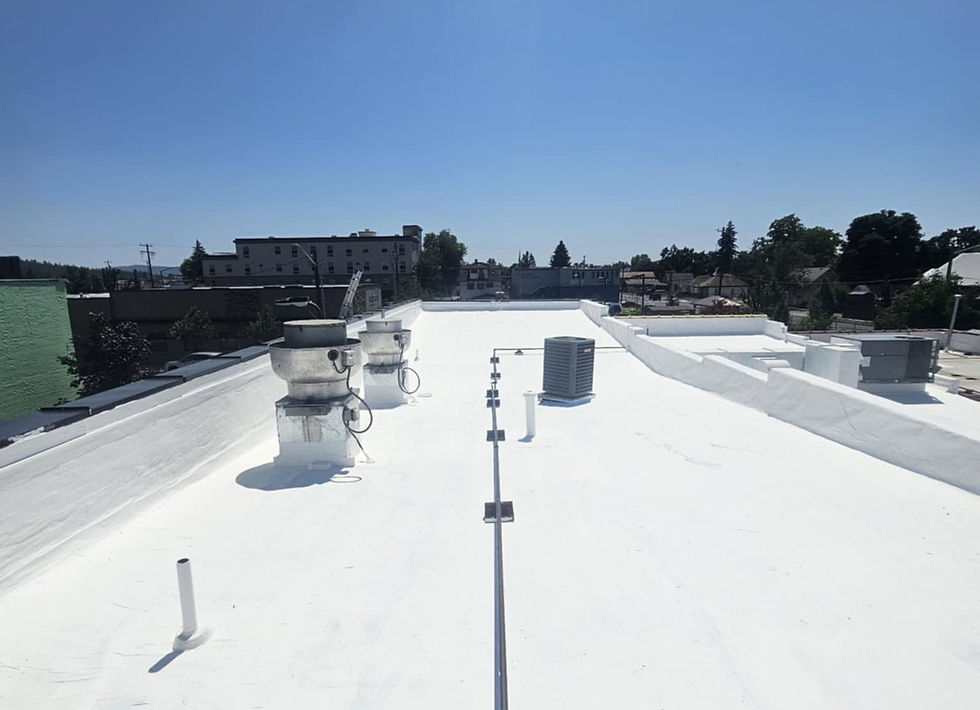
TPO is a single sheet of white or light-colored roofing.
Seams are heat-welded. The sheets are melted together, so the seam becomes one solid piece.
It reflects sunlight, which helps keep the building cooler in summer.
It installs fast and is a cost-effective choice for most buildings.
Watch out for grease and oil. TPO doesn't resist them well.
For most offices, warehouses, retail and multifamily buildings, TPO is our go-to.
PVC: the tough one for grease and chemicals
PVC looks a lot like TPO and is also heat-welded.
It resists most chemicals, including grease and oil. That makes it a strong pick for restaurants, food processing and buildings with exhaust vents that drop grease on the roof.
It's known for puncture resistance.
It handles complex roof shapes well.
If your roof sees grease, PVC is usually worth it.
EPDM: the rubber roof
EPDM is a black rubber roof that has been around a long time.
Seams are glued or taped, not welded. Those seams can need more upkeep as the roof ages.
It's dark, so it soaks up heat.
It can break down with water that sits on it for long periods.
It's often the lowest-cost install.
We repair and maintain plenty of EPDM roofs. When it's time to replace one, we often recommend moving to TPO or PVC.
Quick side-by-side
TPO | PVC | EPDM | |
|---|---|---|---|
Seams | Heat-welded | Heat-welded | Glued or taped |
Color | White or light | White or light | Usually black |
Grease and oil | Not resistant | Resistant | Not resistant |
Standing water | Holds up well | Holds up well | Can break down over time |
Best for | Most buildings | Restaurants, chemicals, complex roofs | Budget installs and repairs |
How long do they last?
GAF, one of the largest commercial roofing makers, says lifespan and warranty coverage are often similar across these three. The thickness of the sheet and the quality of the install matter more than the type.
That's why we install systems from GAF, Versico and GenFlex to the maker's specs, and register the warranty for you.
What we look at before we recommend one
What the building is used for, and whether anything greasy or chemical hits the roof
Where water sits after rain or snowmelt
What's under the roof now, and whether it's wet
Rooftop units, vents and foot traffic
Your budget and how long you plan to own the building
Learn more about our commercial roofing services.
Get a straight answer for your building
We'll inspect your roof, take core samples if needed, and give you a clear plan with photos.
Or call (509) 842-6611.


Comments